
- The Insider's Choice
Retiring in Vietnam
A Note from Neil
— Neil Crossland, Ho Chi Minh City
£1,000–1,300/mo
Single (comfortable)
£1,500–2,000/mo
Couple (comfortable)
£300–500/mo
1-bed apartment (expat area)
No — frozen
UK State Pension uprated?
- Visa & Residency
Important: Vietnam has no dedicated retirement visa
Unlike Thailand or Malaysia, Vietnam does not currently offer a purpose-built retirement visa. This is the most significant practical challenge of retiring here — and the one Neil helps clients navigate.
The most common long-stay routes for retirees are the Business (DN) visa (up to 12 months with a local sponsor), the Investor (DT) visa (1–5 years, requiring a minimum investment of approximately $125,000), and the Family-sponsored visa (up to 5 years, for those with Vietnamese family connections).
Vietnam’s e-visa was extended to 90 days in 2023, which is useful for initial exploration. For longer stays, most retirees work with a local visa agent to maintain legal status through annual renewals or business visa arrangements.
The improving picture: Vietnam is actively working on long-term residency reforms. A proposed “golden visa” valid for 5–10 years was under discussion in 2025, aimed at attracting individuals who contribute economically or culturally. This is a space to watch closely.
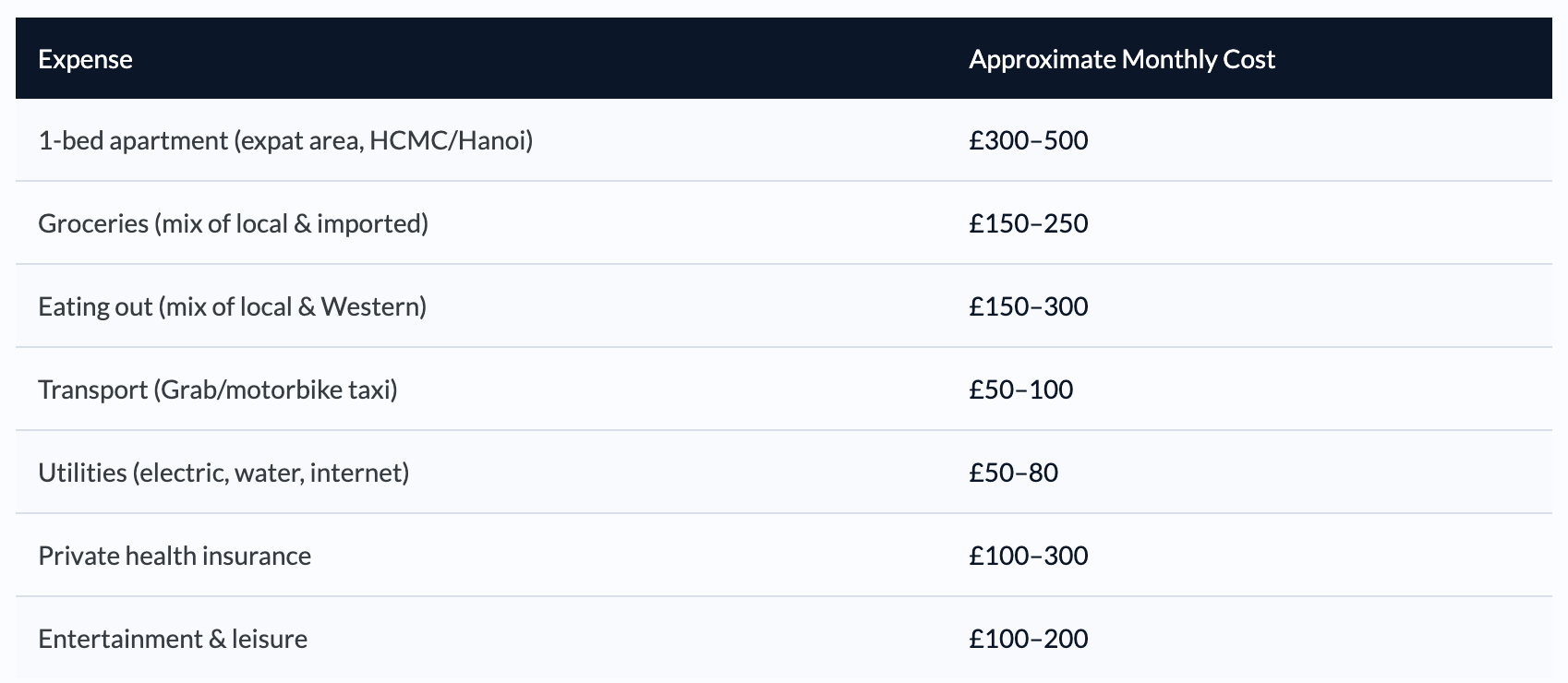
- Cost of Living
- Healthcare
Healthcare in Vietnam’s major cities has improved dramatically over the past decade. Ho Chi Minh City and Hanoi both have international-standard private hospitals with English-speaking staff, modern equipment, and consultation fees that are a fraction of Western costs.
FV Hospital (HCMC) and Vinmec International Hospital (Hanoi and HCMC) are the two most commonly used by expats. Consultations typically cost £25–50. Most procedures cost 50–70% less than equivalent treatment in the UK or Australia.
International health insurance for a 60–65 year old typically costs £100–300 per month depending on coverage level and pre-existing conditions. This is strongly recommended — public hospitals, while improving, are not equipped for complex expat healthcare needs.
Outside major cities: Healthcare quality drops significantly outside HCMC, Hanoi, and Da Nang. If you are considering a smaller city or coastal town, factor in travel time to the nearest international hospital.
- Where to Live
Ho Chi Minh City
Da Nang
Hoi An
- Genuine Strengths
- Exceptional cost-to-quality ratio — one of the best in Asia
- Warm, welcoming culture with genuine hospitality
- World-class food scene at every price point
- International-standard hospitals in major cities
- Dynamic, energetic cities that never feel stagnant
- Improving visa landscape with long-term reforms underway
- Honest Challenges
- No dedicated retirement visa — requires ongoing management
- Language barrier outside major cities
- Bureaucracy can be slow and opaque
- Healthcare quality drops significantly outside HCMC/Hanoi/Da Nang
- UK state pension is frozen — no annual increases
- Traffic in major cities can be intense